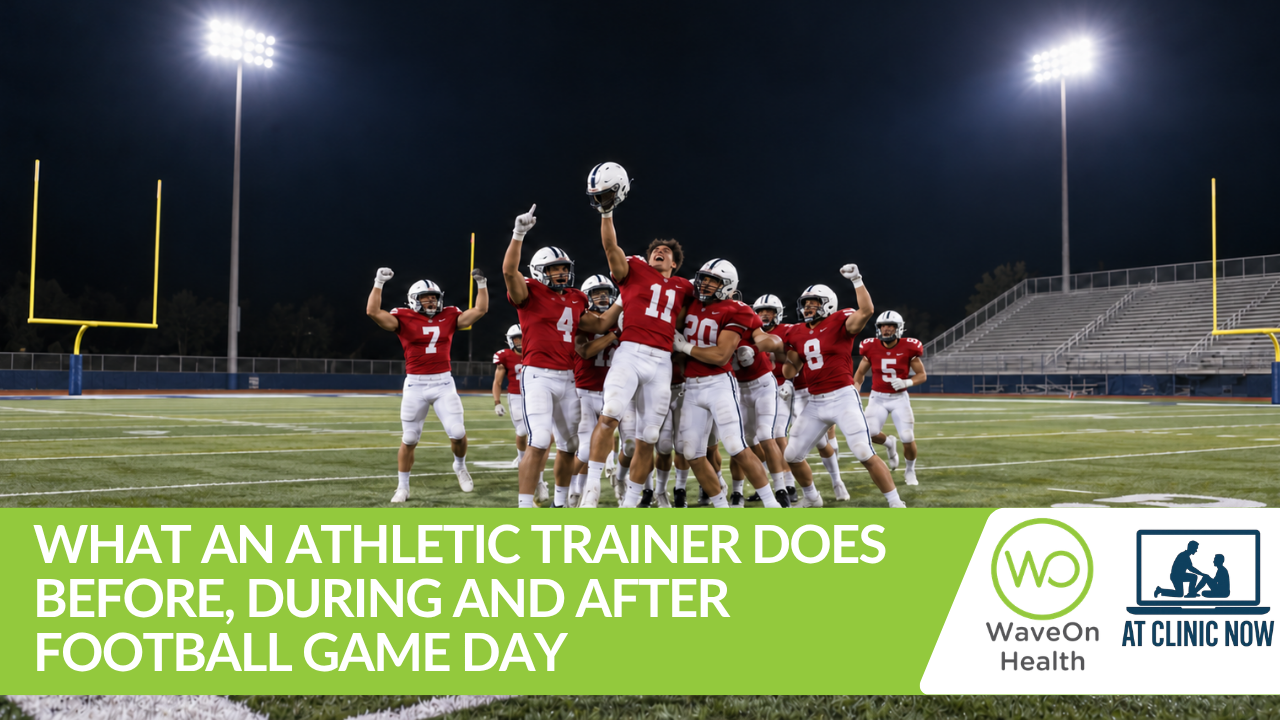
Friday night sports in New Mexico and across the country come with bright lights, packed bleachers, long drives, and schedules that rarely cooperate. Behind the excitement, schools are also managing an important question: When an athlete needs support, is a qualified athletic trainer available?
Athletic trainer access is not only a staffing issue. It is a scheduling, geography, and workload issue. Practices overlap. Teams travel. Injuries do not wait for office hours. For athletic directors and school leaders, understanding where coverage gaps happen is the first step toward building a safer, more realistic plan.
WaveOn’s guide to protecting athletes without a full-time athletic trainer explores the broader challenge. Here, we look at four realities that make consistent coverage difficult on game day and throughout the week.
Friday Night Lights Can Come With a Long Drive
School sports can cover a lot of ground. That is especially true in New Mexico, Colorado, Texas, and other states where teams may travel significant distances for road games, tournaments, and district competition.
Not every school is remote, and not every trip is a long one. Still, geography can make consistent access to a qualified athletic trainer harder for some programs. One professional may be responsible for multiple venues or teams, while athletes move between school, practice facilities, and competition sites.
The bus can follow the schedule without much trouble. A sore ankle rarely does. A practical coverage plan has to account for the miles between the practice field, the next town, and the professionals who support student-athletes.
One Athletic Trainer Can Have a Very Big Roster
Move from geography to workload, and the picture gets even bigger. A school athletic trainer may support athletes across several sports, seasons, practice schedules, and competition calendars. From the outside, coverage may look complete because an athletic trainer is on staff. In practice, that person may be balancing far more athletes and responsibilities than most people realize.
The work also extends beyond being present at a game. Athletic trainers support prevention, evaluation, documentation, communication, follow-up, rehabilitation within their professional scope, and return-to-participation decisions. Each responsibility takes time, and all of them compete for space in an already full week.
The Game Ends. Athlete Care Does Not.

The scoreboard shuts off. The athlete still wakes up the next morning.
Athletic training continues between competitions through check-ins, recovery guidance, communication with families and school staff, documentation, rehabilitation support, and coordination of return-to-participation decisions. Much of this work happens away from the lights and the crowd, which can make it easy to overlook.
Yet follow-up is often where consistent access matters most. The decisions made after game day can shape whether an athlete is ready for the next practice, the next road trip, or a referral to another healthcare professional.
Road Games Make Access More Complicated
Tournament weekends, away games, overlapping schedules, and multiple teams competing on the same night are normal parts of the school sports calendar. A qualified athletic trainer cannot physically be in two gyms, two fields, or two towns at the same time.
For school leaders, the practical question is not whether every moment can look the same. It is where professional support is available, where the real gaps appear, and which responsibilities require an on-site athletic trainer. Schools should also identify which appropriate, non-emergency follow-up tasks may be handled at a distance.
Answering those questions honestly creates a plan that fits the way a school actually practices, travels, and competes, not an idealized schedule built around a single team in a single gym.
How Schools Can Start Mapping Their Coverage Gaps

A school does not need to redesign its entire athletic healthcare model overnight. It can begin by mapping the moments when athletes are most likely to need support.
- List every practice, home game, road event, and tournament by sport.
- Identify when a qualified athletic trainer is currently available.
- Flag overlapping events and recurring gaps.
- Separate emergency and hands-on responsibilities from appropriate non-emergency follow-up.
- Document backup, referral, communication, and escalation procedures.
- Review the plan each season as rosters and schedules change.
This exercise gives athletic directors a clearer picture of what is working and where additional capacity may be needed.
Frequently Asked Questions
Why is athletic training important for school sports?
Athletic trainers support student-athletes through injury prevention, evaluation, emergency planning, rehabilitation, and return-to-participation processes within their professional scope. Consistent access also gives coaches, families, and administrators a clearer healthcare pathway when an athlete needs help.
What should schools do when an athletic trainer is not available?
Schools should establish emergency action plans, reporting procedures, referral pathways, and clearly defined medical responsibilities before a problem occurs. Coaches should understand what to observe and communicate without being expected to assume clinical duties outside their role.
Does virtual support replace an on-site athletic trainer?
No. Virtual support can expand access for appropriate non-emergency services, but it does not replace emergency response, hands-on evaluation, or an on-site athletic trainer when physical presence is necessary.

Keep the Lights On and the Care Within Reach
School sports will always bring busy schedules, long drives, rivalries, and the occasional athlete who mentions five minutes before kickoff that something has been bothering them since Tuesday. What does not have to be unpredictable is how a program connects athletes with qualified support.
Start with WaveOn’s guide to closing the athletic trainer access gap, then explore WaveOn’s athletic training solutions for schools and sports organizations. For Virtual Assistant Athletic Trainer support in New Mexico, Colorado, and Texas, connect with WaveOn’s partner, AT CLINIC NOW.