

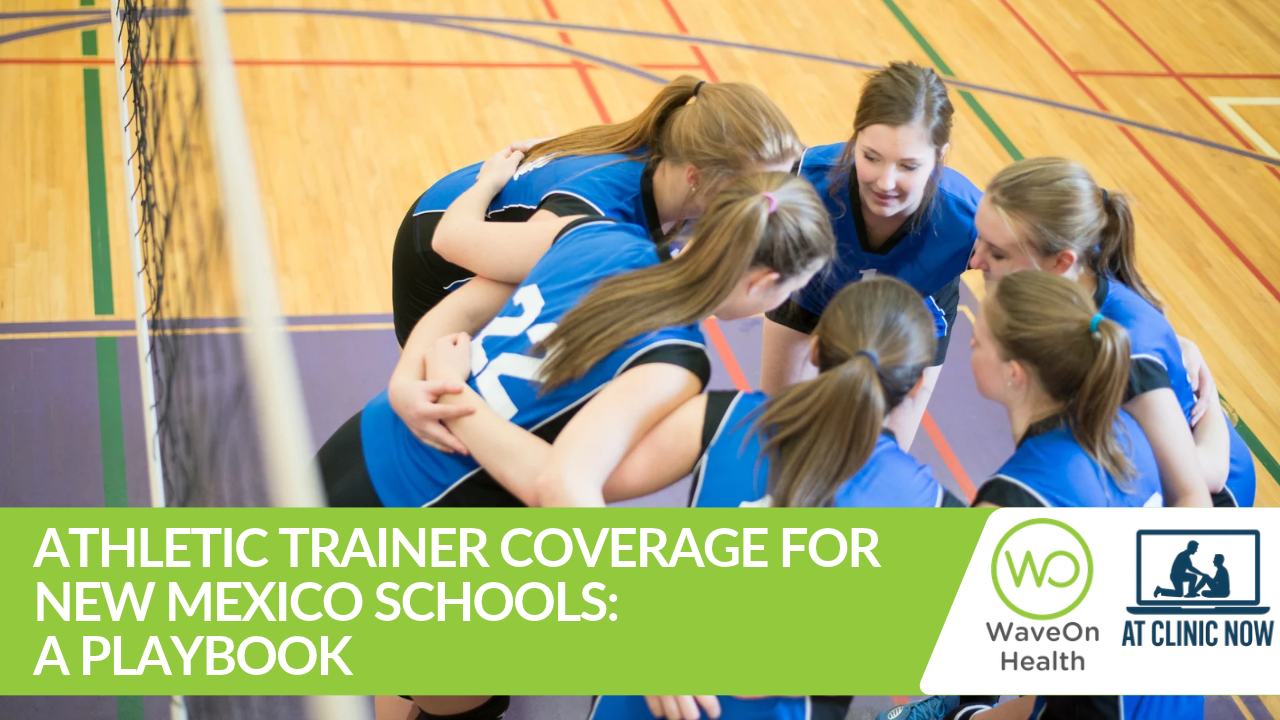
For many New Mexico schools, the real challenge isn’t recognizing the value of athletic training. It’s finding an approach to athletic trainer coverage for New Mexico schools that works across distance, schedules, campuses, and available resources.
WaveOn has already examined whether the national athletic trainer shortage is really a staffing problem. This playbook focuses on the next question: what can a New Mexico district actually do about its access gap?
Part of WaveOn’s answer comes through its partner, AT CLINIC NOW. AT CLINIC NOW combines on-site athletic trainers with Virtual Assistant Athletic Trainer (VAAT) services, a hybrid staffing approach it describes as the only scalable athletic training solution for schools, colleges and universities. For districts that are stretched thin or have no athletic trainer at all, that model opens up options that a single job posting can’t.
Why Athletic Trainer Access Is Harder for Some New Mexico Schools
New Mexico covers a lot of ground. Many districts serve small enrollments spread across long distances, with teams traveling far for competition and some communities located well away from sports medicine clinics and specialty care.
Nationally, research on athletic training employment by geographic setting and school size has identified budget, school size, and rural location as meaningful barriers to athletic trainer access in secondary schools. That research is national, not New Mexico specific, but the barriers will sound familiar to many district leaders here.

Recruiting a credentialed athletic trainer to a remote community can be difficult. Retaining one can be harder when the role means long travel days, evening events, and responsibility for every sport on campus. The NFHS has written about how much the job involves beyond tape and ice, which is part of why these positions are demanding to fill.
None of this means a district has failed. It means the traditional model of one full-time athletic trainer per school doesn’t always fit the geography, budget, or staffing market a district is working with.
Start With the Access Gap, Not the Job Title
When a district can’t fill an athletic trainer position, it’s natural to frame the problem as one open job. A more useful starting point is mapping where athletes actually need qualified support.
Look at practices, games, multiple campuses, team travel, weekends, injury follow-up, return-to-play coordination, and communication with parents and coaches. Note which of those moments currently have a credentialed athletic trainer available and which don’t.
This turns an open-position problem into a planning problem. Some gaps require someone physically present. Others, like after-hours follow-up questions or recovery check-ins, can be handled in different ways. Once leaders see the full picture, the right mix of solutions becomes much clearer.
WaveOn’s article on the coverage gap athletic directors can’t ignore explains why these gaps matter even when nothing’s gone wrong yet.
Four Athletic Trainer Staffing Models New Mexico Schools Can Consider
Most districts end up choosing from four models, or a combination of them. Here’s how they compare.
| Model | Best Fit | Strengths | Limitations |
|---|---|---|---|
| Full-time on-site athletic trainer | Larger schools or districts with stable funding | Daily presence, strong relationships, immediate emergency response | Hardest to fund and recruit, especially in rural areas |
| Contracted or outreach athletic trainer | Schools near a clinic or hospital partner | Reduces hiring burden, brings clinical backing | Hours may be limited, depends on the provider’s reach |
| Shared district or multi-campus | Districts with several nearby campuses | Spreads expertise across schools | Travel time, one campus may be without support at any moment |
| Hybrid with VAAT support | Rural, multi-campus, or understaffed districts | Extends reach across hours and locations, can be the main point of access where no athletic trainer is on site | Cannot provide hands-on evaluation or emergency response, which require local plans |
The NATA secondary school statement supports full-time on-site athletic trainer access, and that remains the gold standard. A hybrid model is designed to extend the professionals a district has, not to replace that standard.
For a rural school that has no athletic trainer and no realistic path to hiring one this year, though, hybrid support may be the most practical way to give athletes access to athletic training expertise at all.
How Hybrid Staffing Can Support Rural and Multi-Campus Districts
The Short Answer
Virtual and hybrid support expands a district’s capacity. It doesn’t replace on-site athletic trainers, Emergency Action Plans, or local emergency response.
In practice, Virtual Assistant Athletic Trainer (VAAT) support through AT CLINIC NOW can help with follow-up after school hours, non-emergency concerns at a campus without an athletic trainer present, prevention check-ins, recovery guidance, and care coordination with parents and physicians.
For a district where one athletic trainer is responsible for two campuses and a large roster, that support means fewer athletes waiting days for a follow-up conversation. The on-site athletic trainer can focus on the work that truly requires physical presence.
For a rural school with no on-site athletic trainer, the hybrid model can become the primary point of access. Coaches, athletes, and families gain a credentialed athletic trainer to consult on non-emergency concerns, while the school’s Emergency Action Plan and local emergency services stay in place for urgent situations.
The NFHS guidance on what to do when you don’t have an athletic trainer is a useful companion read for schools in that position. For more on keeping athletes safe in the meantime, see how to protect athletes without a full-time athletic trainer.
Build a District Athletic Trainer Access Plan
A written plan keeps everyone aligned, from the superintendent to the volunteer assistant coach. Use this checklist as a starting point.
| Plan Element | What to Define |
|---|---|
| Hours and locations | Where and when athletic training support is available at each campus |
| Emergency responsibilities | Who responds first and who calls for help when no athletic trainer is present |
| On-site versus virtual roles | Which services need physical presence and which can be handled virtually |
| Credential verification | How the district confirms every provider is a credentialed athletic trainer |
| Parent communication | How families are informed about injuries, restrictions, and follow-up |
| Documentation | Where injury records live and who can access them |
| Referral pathways | Which physicians and clinics athletes are referred to |
| Return-to-play communication | How clearance decisions are shared with coaches and families |
| Emergency Action Plans | Venue-specific plans, reviewed and rehearsed each season |
| Measurement and reporting | What the district tracks to see if the plan is working |
| Policy alignment | Consistency with district policy and NMAA requirements |
Review the New Mexico Activities Association sports medicine resources when building the plan, and confirm requirements are current before each season.
What to Ask Before Contracting Athletic Training Services
Before signing with any provider, ask how they staff their services and how they verify credentials. Ask about response times, backup support when the assigned athletic trainer is unavailable, and whether they can reach rural campuses.
Next, ask how they’ll work with your existing staff, how they protect athlete data on their technology platforms, and what reporting your district will receive.
Finally, get clear answers on service boundaries, how emergencies are escalated, and how the cost structure works. A good partner will welcome these questions.
Frequently Asked Questions About Athletic Trainer Coverage for New Mexico Schools
Why do New Mexico schools struggle to hire athletic trainers?
New Mexico districts may face the same barriers identified nationally, including budget limitations, school size, rural geography, travel demands, and difficulty structuring positions that attract and retain qualified professionals. Rural location has specifically been identified in secondary-school research as a barrier to athletic trainer employment and access.
How can rural New Mexico schools expand athletic trainer coverage?
Rural schools can evaluate several approaches, including contracted athletic trainers, shared support across campuses, partnerships with healthcare organizations, and hybrid models that combine scheduled on-site services with virtual follow-up. The right mix depends on athlete volume, geography, budget, existing staff, emergency needs, and the services that require physical presence.
What is a hybrid athletic trainer model for schools?
A hybrid model combines in-person athletic training with virtual support. On-site professionals handle emergencies, hands-on evaluation, and other work requiring physical presence. Virtual Assistant Athletic Trainer (VAAT) professionals can extend appropriate follow-up, prevention, documentation, communication, and non-emergency support into hours or locations where the school’s on-site athletic trainer is unavailable.
Does VAAT support replace an on-site athletic trainer?
No. Virtual Assistant Athletic Trainer (VAAT) support should expand a school’s capacity, not replace the value of qualified on-site athletic trainers. NATA supports full-time on-site athletic trainer access in secondary schools. A hybrid approach is most useful when districts need additional reach across campuses, schedules, rural locations, or staffing gaps.
What should a New Mexico school athletic trainer coverage plan include?
The plan should identify who provides care, where and when support is available, emergency responsibilities, documentation standards, parent communication, referral pathways, and return-to-play procedures. It should also explain when virtual support is appropriate and remain aligned with district policies and current New Mexico Activities Association sports medicine requirements.

Solve for Coverage, Not Just the Open Position
New Mexico schools don’t all have the same roster size, geography, budget, or staffing market. A useful plan starts by identifying where athletes currently go without qualified support and then choosing the right combination of on-site, contracted, shared, and virtual resources.
For more context, read WaveOn’s discussion of the athletic trainer shortage and staffing problem. Then review school and district athletic trainer coverage options to explore how WaveOn can expand capacity while supporting the professionals and systems your district already has. You can also learn more about WaveOn Health athletic training capacity.
For Virtual Assistant Athletic Trainer (VAAT) support, connect with WaveOn’s partner, AT CLINIC NOW.

