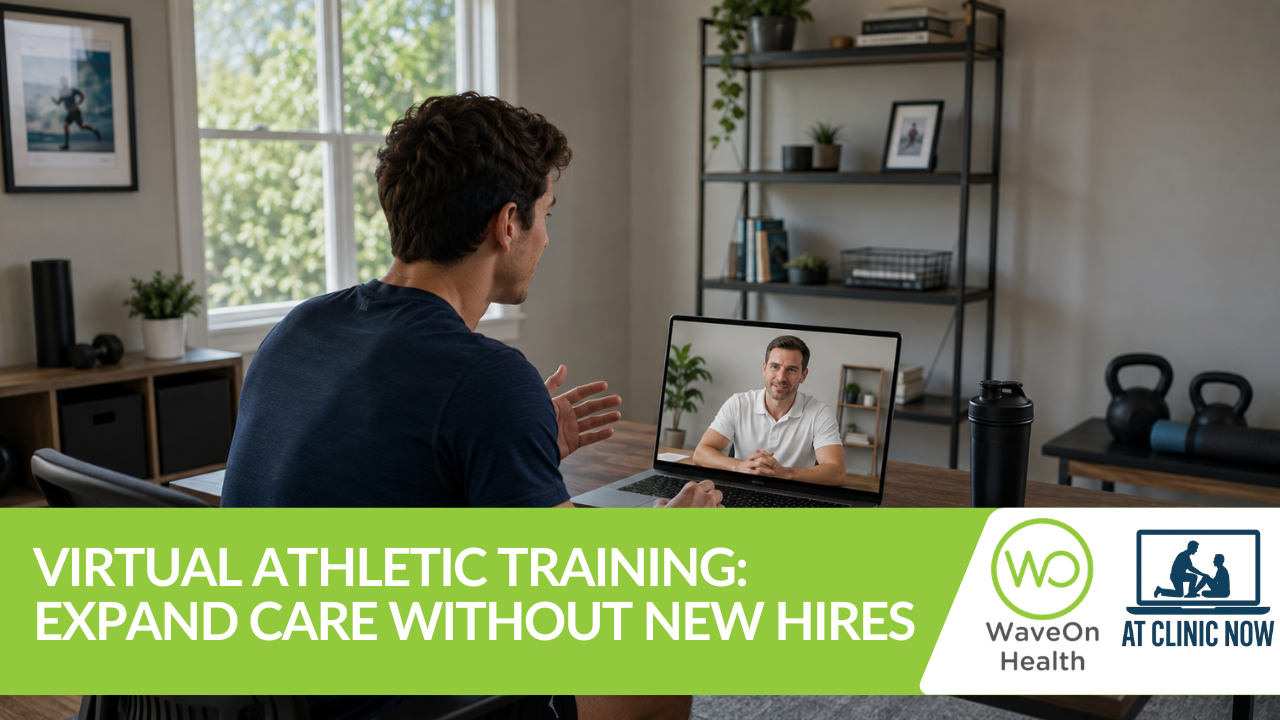
Sports participation keeps climbing, injury surveillance data keeps confirming what coaches already know from the sidelines, and most organizations still cannot hire their way out of a staffing gap. Virtual athletic training has emerged as a practical answer, giving athletes access to credentialed athletic trainers for guidance, evaluation, and recovery support without requiring a new full time role on the budget.
This model works because it is built to extend care, not replace the people already doing the work. As shown in our case study on fast-tracking Achilles injury care, a virtual athletic trainer can identify the right care pathway quickly and keep athletes connected to follow up support long after the first conversation, which is exactly the kind of capacity most programs are missing today.
What Virtual Athletic Training Actually Involves
Virtual athletic training connects athletes with a credentialed athletic trainer through video visits and secure messaging for injury evaluation, prevention guidance, and recovery tracking. It follows the same clinical standards as in person athletic training, adapted to a remote format so more athletes can get access to it regardless of whether their school or organization has a full time athletic trainer on site every day.

A typical virtual athletic training model includes an initial evaluation where the athlete describes symptoms and history, guided movement assessments over video, a documented care plan, and scheduled follow ups to track recovery. For many musculoskeletal concerns, this format works just as well as an in person first visit, since much of the initial evaluation relies on history, movement, and reported symptoms rather than equipment only available in a clinic. Telehealth for sports injuries is not a new concept in medicine broadly, but applying it specifically to athletic training gives programs a tool that fits how sports actually operate: practices and games happening simultaneously across multiple locations, with one athletic trainer physically unable to be everywhere the care is needed.
How It Works, With or Without an Athletic Trainer Already On Staff
For programs that already have an athletic trainer, virtual athletic training plugs directly into the workflow that athletic trainer already has. When a virtual visit identifies an injury that needs hands on treatment, imaging, or in person evaluation, the virtual athletic trainer refers the athlete back to on site staff or an appropriate physician, with documentation already prepared so nothing gets lost in the handoff. When a virtual visit can fully manage a case remotely, such as a mild strain that just needs a structured recovery plan, it frees the on site athletic trainer to focus on the athletes and situations that require someone physically present.
For rural schools, small clubs, and programs that do not have an athletic trainer on staff at all, virtual athletic training plays a different role: it becomes the primary point of access to credentialed athletic training care, not a supplement to it. Many rural districts cover wide geographic areas with too few athletic trainers to go around, and a virtual visit is often the only realistic way an athlete gets seen by a credentialed athletic trainer, whether that is for an initial evaluation, a return to play conversation, or ongoing recovery monitoring. In either scenario, on site staff, where they exist, remain the ones making final decisions about return to play and handling emergencies, while virtual support absorbs the evaluations, documentation, and follow ups that would otherwise pile up or simply never happen. The result is a system where every program, whether well staffed or rural and under resourced, has real access to athletic training care and faster answers for athletes regardless of which athletic trainer they see first.
Where Virtual Athletic Training Fits Best
Virtual athletic training tends to deliver the most value in a handful of common situations. Schools and clubs that only have athletic trainer support part time can use virtual support to fill the gaps on days when no one is on site. Multi location sports organizations can give every site access to the same athletic trainer instead of splitting one person across facilities that are miles apart. Rural schools and programs with no athletic trainer on staff at all can use virtual athletic training as their primary and sometimes only access to credentialed care, rather than traveling long distances or going without.
Clinics managing a high volume of youth and amateur athletes can use virtual visits to triage new injuries quickly, so athletes are not waiting weeks for an in person appointment just to find out whether they need one. Programs with seasonal spikes in injury volume, particularly during preseason conditioning, can add virtual capacity temporarily instead of hiring seasonal staff they cannot fully utilize the rest of the year. In each of these cases, the fit works because the need is for more access to expert guidance, not necessarily more hands physically on site at every location.
What the Data Says About the Need for Expanded Access
The case for expanding athletic training access is not just anecdotal. National surveillance data has tracked rising participation and rising injury volume in youth and high school sports for years, while staffing at many schools has not kept pace. Benchmark studies on athletic training services in public secondary schools have documented how unevenly access to a credentialed athletic trainer is distributed, with some schools fully staffed and others relying on part time or no dedicated athletic trainer at all.
Return to play research published in the Journal of Athletic Training consistently points to structured, stepwise progression as the standard for safe recovery, which requires consistent tracking and communication that becomes difficult when an athletic trainer is stretched across too many athletes to follow up properly. The data supports what most administrators already sense: the gap between how much access athletes need and how much access most programs can actually provide is not closing on its own, and a virtual athletic training model is one of the more practical ways to close it without waiting for budget cycles to catch up.
Questions to Ask Before Choosing a Virtual Athletic Training Partner
Not every virtual athletic training option is built the same way, so it is worth asking a few questions before committing to one. Are the athletic trainers credentialed in the states where your athletes are located. How does the platform handle documentation and communication with your existing on site staff, and does that documentation transfer cleanly if an athlete needs in person follow up. Partners like AT CLINIC NOW, who also support programs in the school space, can help administrators think through these exact questions before choosing a virtual athletic training partner.

What is the referral process when a case needs more than a virtual visit can provide, and how quickly does that handoff happen. Does the platform integrate with the tools your program already uses for scheduling and record keeping, or will it create a separate system your staff has to manage on top of everything else. Finally, ask how the partner measures outcomes, since a program considering this kind of investment should expect to see data on how virtual support is actually affecting access, response times, and athlete recovery, not just a promise that it will help.
FAQ: Virtual Athletic Training
What is virtual athletic training?
Virtual athletic training connects athletes with a credentialed athletic trainer through video visits and digital communication for injury evaluation, prevention guidance, and recovery tracking. It follows the same clinical standards as in person athletic training, adapted to a remote format for accessibility and scale.
Does virtual athletic training replace an on-site athletic trainer?
Not necessarily. Where a program already has an athletic trainer, virtual support supplements that staff by filling scheduling gaps, supporting additional teams or locations, and easing workload during peak season, with on site athletic trainers remaining central to athlete care decisions. But for rural schools and programs with no athletic trainer on staff at all, virtual athletic training is not a supplement to anything: it is the primary access point to credentialed athletic training care.
What kinds of injuries can a virtual athletic trainer help with?
Virtual athletic trainers can triage and guide care for many musculoskeletal issues, including sprains, strains, and overuse injuries, and help coordinate return to play planning. Cases requiring surgery, imaging, or in person evaluation are referred to appropriate physicians or specialists as part of the care pathway.
Is virtual athletic training effective for return-to-play decisions?
Yes, when paired with clear documentation and coordination with on site staff, physicians, and families. Return to play frameworks published in the Journal of Athletic Training emphasize structured, stepwise progression, which virtual athletic trainers can track and communicate consistently across the athlete’s care team.

Expanded Access Does Not Require Added Headcount
Sports organizations do not need to choose between adding payroll and leaving athletes underserved. Virtual athletic training gives programs a way to extend expert athletic training access to more athletes, more consistently, using the staff and budget they already have. If your organization is weighing how to close access gaps this season, see how the WaveOn model works and explore WaveOn Connect, the platform that brings virtual athletic trainers and your existing staff together in one system.
WaveOn Health works with partners like AT CLINIC NOW to bring this kind of access to schools that need it most. A short conversation now can prevent a much longer one after an injury goes unmanaged.