Athletic trainer software can make your program safer, or it can turn into another dashboard nobody trusts. For high schools and youth sports organizations, the right system does three things well: it improves communication, keeps documentation consistent, and supports clear next steps when athletes report pain. This guide breaks down what to look for, what to avoid, and how to evaluate software based on real outcomes (not feature lists). We’ll also cover where virtual athletic trainer support fits when staffing is limited and coverage gaps are costing programs time, money, and momentum.
What Athletic Trainer Software Should Do (In Plain English)

Athletic trainer software exists to solve a specific set of operational problems: inconsistent injury documentation, gaps in follow up, unclear return to play timelines, and poor communication between staff, families, and providers. At its core, the software should serve as the central coordination point for athlete care across your entire program.
That means it should reduce the time your staff spends chasing information and increase the consistency of how injuries and conditions are tracked from the first report through full clearance. If a tool can’t do those two things well, the feature list doesn’t matter.
For context, an estimated 12 million young athletes between the ages of 5 and 22 suffer a sport related injury each year in the United States, resulting in roughly $33 billion in annual health care costs, according to the U.S. Department of Health and Human Services. Schools and clubs that handle injury reporting reactively, or not at all, put athletes at risk and expose themselves to preventable liability.
The 5 Must Have Features for Athletic Trainer Software
Not every feature a vendor lists will be relevant to your program. Focus on these five capabilities that directly impact athlete safety and operational efficiency.
1. Structured Injury Documentation
Every injury report should follow a consistent format that captures the who, what, when, where, and what happened next. Software should prompt your staff through this process rather than relying on free text notes. Structured documentation also protects your program legally and ensures nothing falls through the cracks when multiple staff members are involved.
2. Communication Tools for Families and Coaches
Parents need timely updates. Coaches need clearance status. Athletic directors need a summary view. The right athletic trainer software connects all of these stakeholders without creating a chain of phone calls or email threads that slow everything down. Look for platforms that include direct messaging, automated status alerts, and family facing portals.
3. Return to Play Tracking and Protocols
A documented, step by step return to play pathway is non negotiable. Software should track where each athlete stands in the recovery process, flag incomplete steps, and prevent premature clearance. This is especially important for concussion protocols, where missed steps carry serious consequences.
4. Sports Injury Documentation Workflow Integration
Your software should fit into how your staff already works, not the other way around. That means mobile friendly interfaces for sideline use, quick entry options, and compatibility with existing record systems. If the documentation workflow adds 20 minutes of extra work per event, staff will stop using it.
5. Reporting and Compliance Dashboards
Athletic directors and administrators need visibility into injury trends, response times, and coverage logs. A good reporting layer helps you identify risk patterns across seasons and sports, justify staffing decisions to your board, and demonstrate compliance with state or league requirements.
What to Avoid: Common Buying Mistakes in Schools and Clubs
The biggest mistake schools make when evaluating athletic trainer software is buying based on a demo instead of a use case. Here are the most common traps.
Overbuying features you’ll never configure. Enterprise level platforms built for Division I programs often include modules for nutrition tracking, performance analytics, and advanced billing. Most high school and youth programs don’t need them, and the added complexity makes adoption harder.
Choosing tools without clinical input. If the athletic trainer or sports medicine coordinator isn’t at the table during the evaluation, the software will likely miss the mark on workflow. Administrators should lead procurement, but clinical staff should validate the shortlist.
Ignoring onboarding and support. A platform is only as good as your team’s ability to use it consistently. Ask vendors about training resources, onboarding timelines, and ongoing support. If the only training option is a PDF user guide, keep looking.
Assuming software replaces coverage. This is the most critical mistake. No software platform can evaluate a sprained ankle, make a sideline decision, or guide a family through a referral. Software supports the people doing the work, but it is not a substitute for credentialed athletic training professionals.

Software vs. Coverage: Where a Virtual Athletic Trainer Fits
According to NATA benchmarking data, only about 37 percent of public secondary schools meet the gold standard of having a full time athletic trainer on staff. That means the majority of high school athletic programs are relying on coaches, administrators, or part time coverage to manage injuries and make return to play decisions, a gap that software alone cannot close.
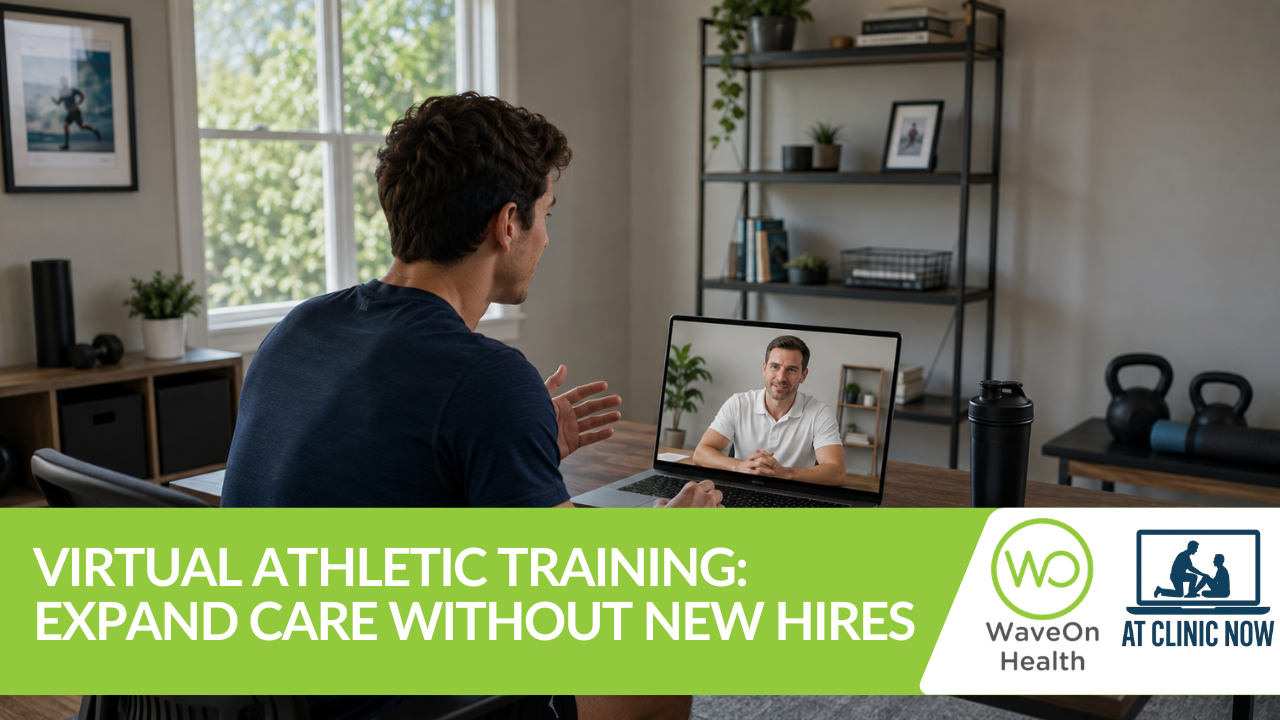
This is where virtual athletic training changes the equation. A virtual athletic trainer provides credentialed, licensed athletic training support through a combination of technology and direct clinician interaction. Athletes and staff can connect with a certified athletic trainer for evaluations, injury guidance, and ongoing care coordination without requiring someone to be physically present at every practice or game.
For schools and youth sports organizations that can’t justify or fund a full time hire, the virtual model fills coverage gaps while the software handles documentation and communication. Together, they create a system where athlete care for schools and clubs is consistent, accountable, and scalable across multiple teams and seasons.
WaveOn Health, for example, pairs its WaveOn Connect platform with virtual and on site athletic training support. The model is designed to extend your program’s capacity without adding headcount. You can explore the full solutions for athletic programs to see how this works in practice, and review team coverage options to understand the pricing structure.
A Simple Buyer Checklist: Use This Before You Sign

Before you commit to any athletic trainer software, walk through this checklist with your team.
- Does the platform support structured, consistent injury documentation with guided prompts?
- Can families, coaches, and administrators access relevant updates through a shared portal or notification system?
- Does it include a built in return to play protocol that tracks completion and flags gaps?
- Is the interface mobile friendly for sideline and field use?
- Does the vendor provide onboarding, training, and responsive ongoing support?
- Can the platform generate reports for compliance, injury trends, and coverage activity?
- Does it integrate with or complement your existing coverage model?
- If your program lacks consistent athletic trainer coverage, does the vendor offer or connect you with a clinical support solution?
If the answer to most of these is yes, you’re looking at a strong candidate. If the answer to the last two is no, you may be buying a tool that documents problems without actually solving them.
For a closer look at how WaveOn Connect works and what’s included at each level, visit the platform overview. You can also browse the WaveOn FAQs for answers to the most common questions from athletic directors, school administrators, and club operators.
FAQs
What is the best athletic trainer software for high schools?
The best athletic trainer software for high schools is one that prioritizes documentation consistency, return to play tracking, and communication between staff and families. Look for platforms designed specifically for secondary school environments, where staffing is limited and multiple sports share resources. The ideal solution also connects to credentialed virtual athletic training support for programs without full time coverage.
What features should athletic trainer software include?
At a minimum, athletic trainer software should include structured injury reporting, return to play protocol tracking, family and coach communication tools, mobile access for sideline use, and administrative reporting dashboards. Bonus features like integration with virtual athletic trainer services add even more value, especially for programs managing multiple teams with limited staff.
Do schools need athletic trainer coverage if they have software?
Yes. Software handles documentation and communication, but it cannot evaluate injuries, make clinical decisions, or guide return to play in real time. NATA data shows that schools without athletic trainer services rely on coaches and administrators to make medical decisions they are not trained to make. Software and coverage work together; one does not replace the other.
How does virtual athletic training work for teams?
Virtual athletic training connects athletes and staff with licensed, credentialed athletic trainers through a technology platform. Athletes can schedule evaluations, report symptoms, and receive guided care plans remotely. Staff can coordinate with the virtual athletic trainer on return to play decisions and documentation. This model is especially effective for filling coverage gaps in schools and youth programs that don’t have a full time athletic trainer on site.
What should schools document after an injury?
Schools should document the date, time, and location of the injury, the athlete’s description of what happened, any visible signs or symptoms observed by staff, the initial response taken (ice, referral, removal from activity), communication with the family, follow up care instructions, and return to play status. Consistent documentation protects the athlete, the staff, and the organization.
Buy for Outcomes, Not Features
Athletic trainer software should reduce chaos, improve follow through, and make athlete care decisions more consistent, not create more tabs and more confusion. If your program is juggling multiple teams, limited staffing, or inconsistent documentation, the best move is to combine the right tools with a coverage model that scales. The annual cost of youth sports injuries in the U.S. is staggering, and much of that burden falls on programs that lack the infrastructure to prevent, document, and manage injuries effectively. Explore athlete care options for organizations to see how WaveOn supports schools and clubs with virtual athletic training and real time guidance, and reach out to book a demo when your team is ready to move forward.